
Is It Better to Rent or Buy in the UK?
Rent or buy in the UK, worked out by what you own after the years you stay: Stamp Duty, deposit, leasehold charges, house prices and an ISA for the renter.
By Redbison Dev · · 6 min read
United Kingdom edition. Written for UK renters and buyers: pounds, Stamp Duty Land Tax and first-time buyer relief, no mortgage interest relief, council tax, leasehold service charges, ISAs and Private Residence Relief. US edition
A first-time buyer in England looking at a £350,000 house with a £35,000 deposit and a 4.5% mortgage over 25 years would repay £1,750.87 a month. A similar house rents for £1,500. Measured by what each household owns afterwards, the buyer moves ahead of the renter in year 2 and is about £105,700 better off after ten years, but only if prices rise about 3% a year. If prices stay flat, the renter who invests the deposit is still ahead after ten years.
That gap between the two answers is the whole point of the sum. This guide works through it the UK way with the UK Rent or Buy Calculator: which British costs belong in it, which US ones do not, and which assumption decides your result. It explains a method; your own figures decide the answer, and an independent mortgage adviser or financial adviser can help if your situation is complicated.
What changes when you run the sum in the UK
Most rent-or-buy calculators online are built for the US, where buyers deduct mortgage interest and property tax from their income tax. Several of their inputs are wrong for a British home.
- No mortgage interest relief. Owner-occupiers in the UK get no income tax relief on mortgage interest, so the tax rate in the comparison is 0. A US-style calculator left at its default will flatter buying.
- Council tax mostly cancels out. Whoever lives in the home pays council tax, tenant or owner. Leave it at 0 unless the home you would buy is in a different band from the one you would rent.
- Stamp Duty is paid on day one. In England and Northern Ireland, Stamp Duty Land Tax for a home mover is 0% up to £125,000, 2% to £250,000 and 5% to £925,000. First-time buyers pay nothing up to £300,000 and 5% from £300,001 to £500,000, and lose the relief above £500,000 (rates in force since 1 April 2025). On £350,000 that is £2,500 for a first-time buyer and £7,500 for a mover. Scotland (LBTT) and Wales (LTT) have their own bands.
- Leasehold charges are an owner cost. On a flat, the service charge and ground rent come out of the owner's pocket, not the tenant's.
- No tax on the gain from your home. Private Residence Relief normally takes your main home out of Capital Gains Tax, so the sale is not taxed in the comparison.
- The renter can invest tax-free. Inside an ISA (a £20,000 allowance for the 2026 to 2027 tax year) the renter's investments grow free of UK tax, which is what the calculator's untaxed return assumes.
The method in one paragraph
The calculator follows two households from the same starting cash. The buyer spends the deposit and purchase costs; the renter invests the same sum. Each year it adds up what each household spends on housing, and whichever spent less invests the difference. At the end it compares the buyer's equity after selling costs, plus any investments, with the renter's portfolio. Rent and mortgage payments are never compared directly, because part of each repayment comes back to the buyer as equity.
Worked example: a £350,000 house in England
Inputs for the Rent or Buy Calculator: price £350,000, deposit £35,000, 4.5% over 25 years, purchase costs £5,000 (£2,500 Stamp Duty after first-time buyer relief, £2,500 for conveyancing, survey and fees), selling costs 2%, buildings insurance £400 a year, maintenance £3,500, rent £1,500 a month rising 3%, contents insurance £100, house prices rising 3% a year, a 5% return on the renter's savings and 2% inflation on running costs.
Year one. The buyer spends £24,910 (repayments plus insurance and upkeep) and the renter £18,100. The renter invests the difference. At the end of the year the house is worth £360,500, £353,290 after 2% selling costs, against a mortgage of £308,022, so the buyer's net worth is £45,268. The renter's £40,000 plus savings has grown to £48,981. Renting is ahead by £3,713.
| Year | First-time buyer, buy minus rent | Home mover, buy minus rent |
|---|---|---|
| 1 | -£3,713 | -£8,963 |
| 2 | +£5,231 | -£282 |
| 3 | +£14,870 | +£9,082 |
| 5 | +£36,411 | +£30,029 |
| 10 | +£105,733 | +£97,588 |
The home mover pays £5,000 more Stamp Duty and needs one more year to break even. That is the clearest UK lesson in the table: if there is a real chance you move within two or three years, purchase and selling costs decide the question more than the mortgage rate does.
Which assumptions move the answer
Changing one input at a time from the first-time buyer case:
| Change | Break-even year | Buy minus rent after 10 years |
|---|---|---|
| First-time buyer case | 2 | +£105,733 |
| Home mover, £7,500 Stamp Duty | 3 | +£97,588 |
| Mortgage rate 5.5% throughout | 3 | +£69,476 |
| Rent £1,250 instead of £1,500 | 3 | +£61,918 |
| Selling costs 3.5% | 3 | +£98,677 |
| House prices rise 1% a year | 6 | +£23,655 |
| House prices rise 1%, renter earns 7% | 10 | +£2,297 |
| House prices flat | after year 10 | -£12,230 |
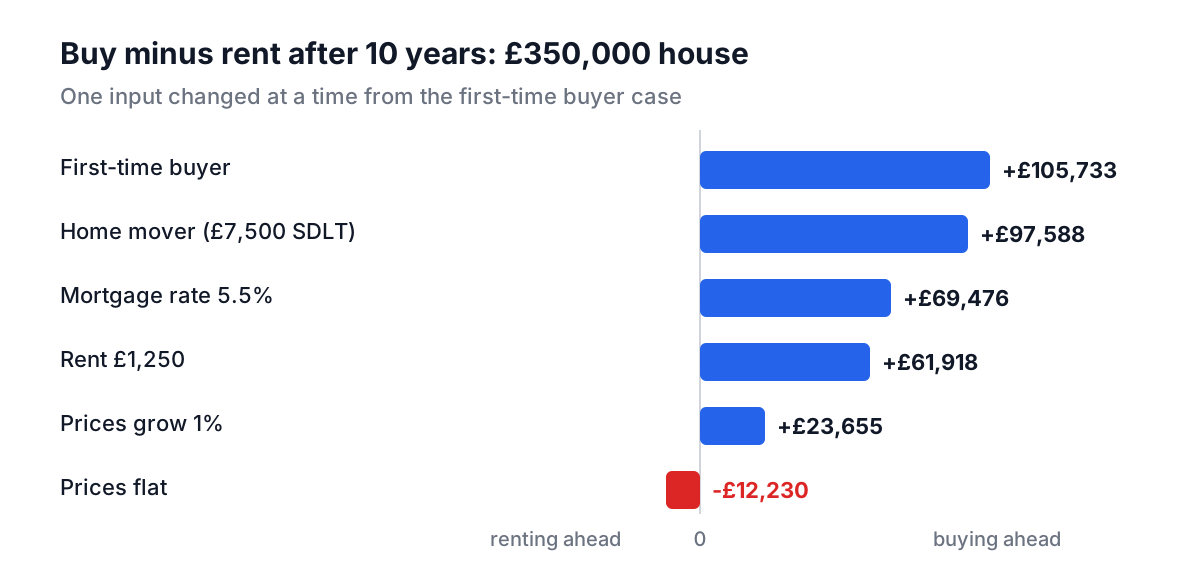
House price growth is the biggest lever and the one nobody can know in advance. The mortgage rate is the second, and in the UK it is not really fixed for 25 years: most deals fix for two or five years, so run the sum again at the rate you expect to remortgage at. The calculator holds one rate for the whole period, so a 5.5% run is a sensible stress case.
The rent matters through the price-to-rent ratio. A house that rents for £1,500 a month costs 19.4 years of rent; one that rents for £1,250 costs 23.3 years, and buying it is a weaker deal at the same price.
A leasehold flat
Flats change the picture because the owner pays the service charge and ground rent, while the tenant's rent already covers them. Take a £250,000 flat with a £25,000 deposit, the same 4.5% mortgage, £2,500 of purchase costs (no Stamp Duty for a first-time buyer below £300,000), £2,400 a year of service charge and ground rent, £1,000 of internal maintenance, no separate buildings insurance (it is in the service charge) and rent of £1,200 a month.
- With flat prices rising 3% a year, buying pulls ahead in year 2 and leads by £91,600 after ten years.
- With 1% a year, the break-even slips to year 4 and the lead after ten years is £32,972.
Ask the seller for several years of service charge accounts and any planned major works before entering a figure, and check how many years are left on the lease, since a short lease can make a flat harder to sell or mortgage.
Saving the deposit: Lifetime ISA and the renter's ISA
A Lifetime ISA can tip a close result towards buying. You can pay in up to £4,000 a year and the government adds a 25% bonus, up to £1,000 a year; you must make your first payment before you are 40. Used for a first home, the purchase has to be at least 12 months after your first payment, through a conveyancer and with a mortgage. GOV.UK says a property costing more than £450,000 triggers a 20% withdrawal charge, and other withdrawals before 60 carry a 25% charge, which takes back more than the bonus. The bonus effectively enlarges the deposit, which you can enter as a bigger Deposit in the calculator.
If you decide to keep renting, the comparison only holds if you really do invest the deposit and any monthly saving. A Stocks and Shares ISA keeps that growth tax-free, matching the calculator's assumption. Cash in a current account earning little would leave the renter well behind every figure above.
Common UK mistakes
- Using a US calculator unchanged. It deducts interest and property tax from income tax, which UK homeowners cannot do.
- Forgetting the remortgage cycle. A 4.5% two-year fix says little about the next 23 years. Test a higher rate.
- Leaving out selling costs. Estate agent fees plus VAT and conveyancing on the sale are typically quoted as a percentage; use real quotes rather than the 2% assumption here.
- Ignoring leasehold costs. Service charges can rise sharply after major works.
- Treating rent as dead money. Mortgage interest, buildings insurance and repairs are spent too. In year one of the example the owner's costs were £24,910 against £18,100 for the renter; the owner only gets ahead through repayments and price growth.
Renting in England has also changed: since 1 May 2026, assured and assured shorthold tenancies have become rolling tenancies under the Renters' Rights Act. Set the yearly rent increase to what local rents are actually doing rather than to a hopeful figure.
For the mortgage side of the decision, the UK mortgage guide explains fixes, reversion rates and the APRC, and the How Much Can I Borrow calculator shows the price your salary and deposit reach.
Frequently asked questions
Is it cheaper to rent or buy in the UK?
Month to month, renting is usually cheaper once repairs and insurance are counted, but buying can still leave you richer. A first-time buyer of a £350,000 house paying £1,750.87 a month moves ahead of a £1,500-a-month renter in year 2 at 3% house price growth. If prices stay flat, renting and investing the deposit is still ahead after ten years.
How long do I need to stay to make buying worth it?
At least as long as the break-even year from your own figures, and longer if prices are uncertain. In the £350,000 example it is year 2 for a first-time buyer and year 3 for a home mover, rising to year 6 if prices grow only 1% a year. Stamp Duty and selling costs are what make short stays expensive.
Should council tax go in a rent or buy comparison?
Usually not. Council tax is paid by the person living in the home, so a tenant and an owner of the same home pay the same bill. Enter only the difference if the home you would buy is in a different band from the one you would rent.
Does a Lifetime ISA change the answer?
It can. The 25% government bonus, up to £1,000 a year, adds to your deposit if you buy a first home costing up to £450,000 at least 12 months after your first payment. Enter the larger deposit in the calculator. If you keep renting, money withdrawn for other reasons before 60 carries a 25% charge.
Do I pay tax when I sell my home in the UK?
Normally not. Private Residence Relief takes the gain on your only or main home out of Capital Gains Tax if you lived there the whole time and the grounds are under 5,000 square metres. Letting it out or using part only for business can reduce the relief.
Sources and further reading
- Stamp Duty Land Tax: residential property rates, GOV.UK. Standard bands and first-time buyer relief up to £500,000.
- Tax when you sell your home, GOV.UK. Private Residence Relief and when it is reduced.
- Council Tax, GOV.UK. Who is responsible for paying, including tenants.
- Lifetime ISA, GOV.UK. Yearly limit, the 25% bonus and the overall ISA allowance for 2026 to 2027.
- Withdrawing money from your Lifetime ISA, GOV.UK. First home conditions, the £450,000 limit and withdrawal charges.
- Renters' Rights Act: an overview for landlords, GOV.UK. Rolling tenancies from 1 May 2026.
- Support available for mortgages as interest rates rise, Financial Conduct Authority. What happens when a fixed rate ends.
Open the Rent vs Buy Calculator
More Analysis Tools
Every tool in the Analysis Tools section, free and in your browser.